

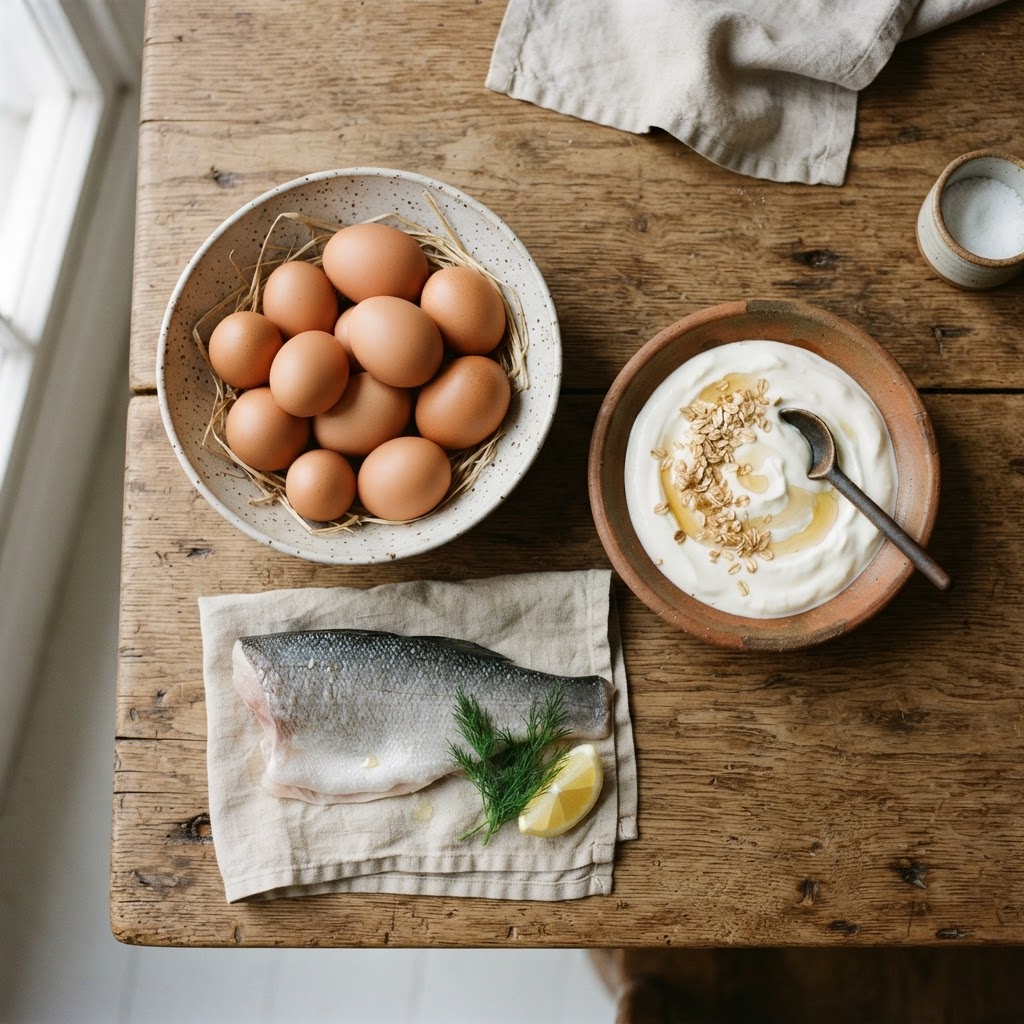
Protein supports strength, recovery, appetite and healthy ageing, without turning every meal into mathematics.
Protein supplies amino acids that your body uses to maintain and repair tissues. It becomes especially important as we grow older because the body can become less responsive to small amounts of it. Eating enough high-quality protein helps preserve strength, mobility and independence.
1Why Protein Matters
Protein supplies amino acids that your body uses to maintain and repair tissues.
It supports:
- Muscles
- Bones
- Skin
- Enzymes
- Hormones
- Immune function
- Recovery after activity
Protein becomes especially important as we grow older because the body can become less responsive to small amounts of it. Eating enough high-quality protein helps preserve strength, mobility and independence.
2Build Meals Around Real Protein
Good whole-food protein sources include:
- Eggs
- Fish and seafood
- Beef
- Lamb
- Pork
- Chicken
- Natural yoghurt and fermented dairy
- Traditional fermented soy foods such as tempeh or natto
Whole protein foods often provide more than protein alone. They may also contain:
- Natural fats
- Iron
- Zinc
- Vitamin B12
- Choline
- Omega-3 fats
- Fat-soluble nutrients
3Protein Quality Matters
Not all foods marketed as “high protein” are equally nourishing. A packaged bar, sweetened drink or flavoured cereal may contain added protein while still being ultra-processed.
Ask:
- What is the main protein source?
- Is this recognisable food?
- Does it contain added sugar or refined starch?
- Is it full of seed oils, gums or flavourings?
- Will it satisfy me like a proper meal?
Adding protein powder to processed food does not automatically make it healthy.
4How Much Do You Need?
Protein needs vary according to:
- Age
- Body size
- Activity
- Strength training
- Recovery needs
- Health status
You do not need to count every gram to improve your intake. A practical approach is to include a meaningful source of protein in each main meal. The protein should be a visible part of the meal, not a decorative sprinkle.
5Spread It Across the Day
Eating nearly all your protein at one meal may be less useful than including a good portion at two or three meals.
For example:
- Eggs or yoghurt in the morning
- Fish, meat or poultry at lunch
- Another whole-food protein at dinner
This creates repeated opportunities for maintenance and repair.
6Protein and Appetite
Protein tends to be satisfying. Meals built around real protein can help reduce:
- Constant snacking
- Sudden hunger
- Cravings for refined foods
- The urge to keep eating after a meal
Protein does not need to be lean to be healthy. Natural fats found alongside whole foods can contribute flavour and satiety.
7Quick Check
Which is the best Metabo approach to protein?
- Count every gram obsessively
- Build meals around whole-food protein
- Choose any product labelled “high protein”
- Avoid natural fat in protein foods
Correct answer: 2 — Build meals around whole-food protein.
Key takeaways
- Protein supplies the building blocks for muscle, bone, skin, enzymes and immune function.
- Choose recognisable whole-food protein sources over products merely labelled “high protein”.
- Include a meaningful portion of protein at two or three meals rather than all at once.
- Protein supports satiety, reducing snacking and cravings for refined foods.
- Protein is the structural foundation of a nourishing meal.
Try this today
- Look at your next meal.
- Identify the main protein source before choosing the side dishes.
References & further reading
- Phillips, S. M. (2016). Nutritional riches in mature adults. Nestlé Nutrition Institute Workshop Series, 83, 61-71.
- Wolfe, R. R. (2017). Branched-chain amino acids and muscle protein synthesis. Journal of Nutrition, 147(3), 261S-263S.
- Paddon-Jones, D. & Rasmussen, B. B. (2009). Dietary protein and muscle protein synthesis. Current Opinion in Clinical Nutrition & Metabolic Care, 12(1), 86-90.
- USDA. (2020). Dietary Guidelines for Americans, 2020-2025. dietaryguidelines.gov