

Good sleep begins long before bedtime and is shaped by the rhythm of your entire day.
Sleep is not wasted time. During sleep, the body supports tissue repair, memory, learning, emotional regulation, immune function, appetite control and hormonal balance.
Poor sleep can affect hunger, cravings, energy, mood and the desire to move. This means sleep supports every other Metabo pillar.
1Sleep Is Active Recovery
Sleep is not wasted time.
During sleep, the body supports:
- Tissue repair
- Memory
- Learning
- Emotional regulation
- Immune function
- Appetite control
- Hormonal balance
- Physical recovery
Poor sleep can affect hunger, cravings, energy, mood and the desire to move. This means sleep supports every other Metabo pillar.
2Anchor Your Wake Time
A regular waking time helps train the body’s internal clock.
Sleeping and waking at very different times each day can create a form of social jet lag. Begin by keeping your wake time reasonably consistent, including on weekends.
A steady morning anchor often makes it easier to feel sleepy at the right time at night.
3Get Morning Light
Natural outdoor light in the morning sends a powerful timing signal to the brain.
It helps tell the body:
- The day has begun
- Alertness should rise
- The internal clock should reset
- Sleepiness should arrive later that evening
Window light is generally weaker than being outdoors. A short morning walk can combine light, movement, fresh air and mental calm.
4Move During the Day
Regular activity can support deeper and more settled sleep.
Useful movement includes:
- Walking
- Strength training
- Household tasks
- Gardening
- Outdoor activity
- Taking movement breaks
Exercise does not need to be exhausting. Consistency matters more than intensity.
5Be Careful With Caffeine
Caffeine can remain active for many hours. Even when you can fall asleep, late caffeine may reduce sleep depth or make sleep more fragmented.
Consider:
- Keeping coffee earlier in the day
- Reducing afternoon caffeine
- Watching tea, chocolate and energy drinks
- Not using caffeine to compensate endlessly for poor sleep
6Create an Evening Descent
The body needs a transition between daytime stimulation and nighttime rest.
An evening routine may include:
- Dimming lights
- Reducing work
- Finishing heavy meals earlier
- Quiet conversation
- Reading
- Gentle reflection
- Preparing the room
- Putting devices away
The goal is not to perform an elaborate ritual. It is to send repeated signals that the active part of the day is ending.
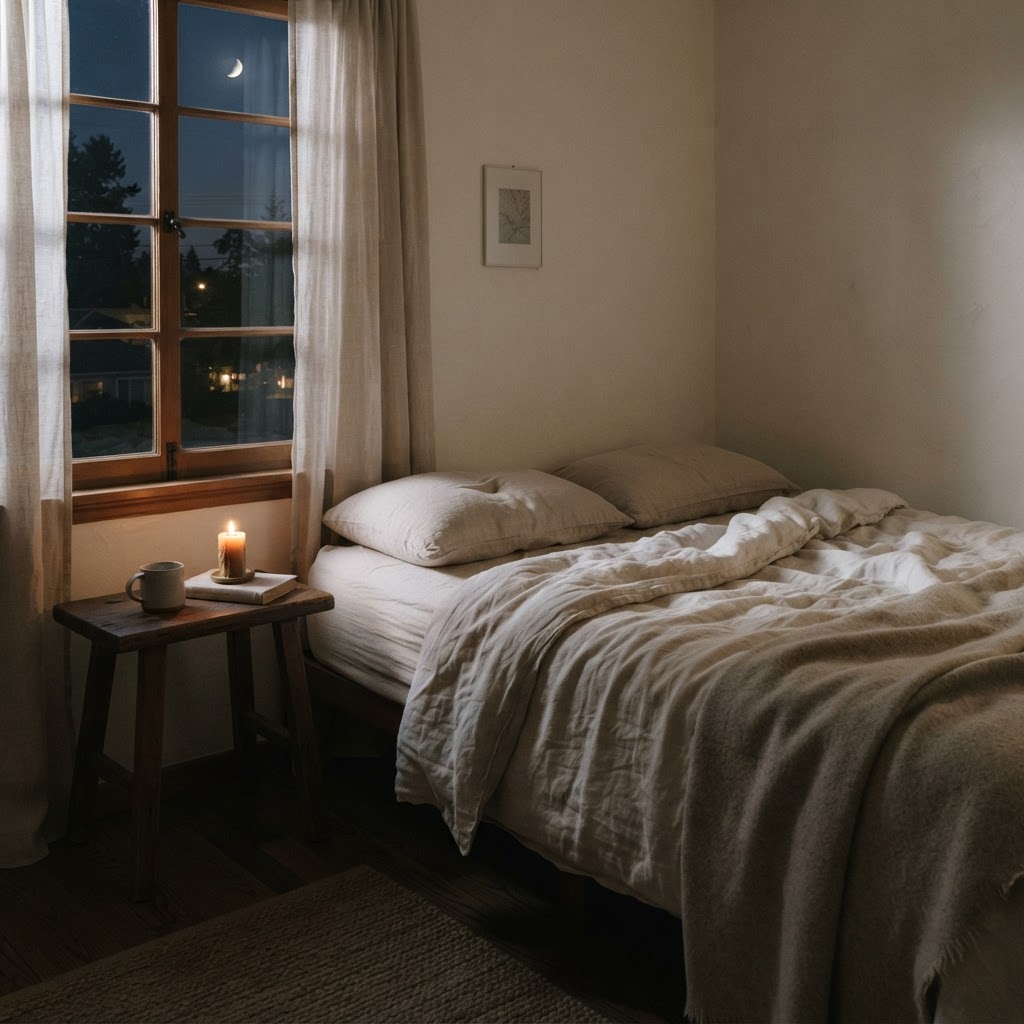
7Build a Sleep-Friendly Room
A supportive bedroom is:
- Dark
- Quiet
- Comfortable
- Slightly cool
- Free from unnecessary alerts
- Associated mainly with sleep
Remove glowing screens and flashing notifications where practical. The bedroom should feel less like a control centre and more like a recovery space.
8Avoid Chasing Sleep
Trying forcefully to sleep can create more tension. Focus instead on creating the conditions for sleep.
If your mind is busy:
- Slow your breathing
- Relax the body gradually
- Keep the lights low
- Avoid checking the clock repeatedly
- Return attention to rest rather than performance
9Look at the Whole Day
A sleep problem may begin with:
- Too little morning light
- Too much evening light
- Low daytime movement
- Late caffeine
- Late meals
- Stress
- Irregular routines
- Excessive screen stimulation
Bedtime is only the final chapter of the day’s sleep story.
10Quick Check
Which habit provides one of the strongest natural signals for the body clock?
- Checking the phone at midnight
- Morning outdoor light
- Sleeping at random times
- Drinking caffeine late in the day
Correct answer: 2 — Morning outdoor light.
Key takeaways
- Sleep is active recovery — it supports repair, memory, mood, appetite and hormones.
- A consistent wake time anchors your body clock more than any bedtime hack.
- Morning outdoor light is one of the strongest natural signals for sleep timing.
- Move during the day, keep caffeine early, and create a calm evening descent.
- Better sleep is built through daily rhythm, not just what happens at bedtime.
Try this today
- Get outside for a short period of morning light and keep tonight’s lights lower during the final hour before bed.
References & further reading
- Walker, M. P. (2017). Why We Sleep: Unlocking the Power of Sleep and Dreams. Scribner.
- Centers for Disease Control and Prevention. (2024). How Much Sleep Do I Need? cdc.gov/sleep/about_sleep
- National Sleep Foundation. (2024). Sleep Hygiene. sleepfoundation.org/sleep-hygiene
- Harvard Medical School. (2019). Sleep and Mental Health. health.harvard.edu/newsletter_article/sleep-and-mental-health